

Canterbury-Bankstown · NSW 2195 · community facilities
Transport Depot Cleaning Lakemba
A site-specific transport depot cleaning scope for Lakemba, shaped by retail, community facilities and mixed-use premises. Clean Best records tasks, access, frequency and review responsibilities before commencement.
- Scope centred on staff areas
- Planning for large yards
- Task frequencies
- Call 02 5839 3012 or 0485 000 860
What is actually behind the quote
Every line here is documented. Ask and the paperwork is in your inbox before the first shift, not after you chase it.
- $20m public liabilityCertificate of currency on request
- Police-checked cleanersWWCC where children are on site
- No lock-in contractFixed written price within 24 hours
What does transport depot cleaning mean for Lakemba premises?
For this locality, the assessment pays particular attention to staff areas, amenities, large yards and shift patterns. These details decide what belongs in the recurring visit and what requires separate approval.
Clean Best operates from 54 Columbia Rd, Seven Hills NSW 2147. Coverage of Lakemba means the team can service an approved premises there; it does not mean the business maintains a staffed office in the suburb.
Transport Depot Cleaning Lakemba is a planned service for retail, community facilities and mixed-use premises. Its purpose is to translate the visible workload into tasks, frequencies, access instructions and a review method.
- Depot at Seven Hills54 Columbia Rd, Seven Hills NSW 2147 — a different council area
- Police-checked cleanersSite-inducted before the first shift
- $20m public liabilityCertificate of currency before the first shift
- Written quote in 24 hoursFixed price, no lock-in contract
Lakemba buyer guide · community facilities
Transport Depot Cleaning in Lakemba: decisions, evidence and operating fit
Planning quality review around Lakemba operations
transport depot cleaning Lakemba — Lakemba sits within Canterbury-Bankstown, where the published locality profile includes retail, community facilities and mixed-use premises. That mix makes how quality will be checked after the recurring roster begins a practical starting point for transport depot cleaning. Rather than copying a universal task list, the assessment tests whether staff areas, amenities and the contact, evidence and response path for a missed item apply to the actual premises. The service window and task order are checked against large yards and shift patterns; this is especially important for the measurable quality standard. The mobilisation record includes task frequencies, while records for review contact support the ongoing check of supervisor follow-up and recorded site feedback. This gives the Lakemba contact a clear way to compare proposals and decide how an agreed task will be inspected and corrected before approving the service.
The operating pattern in Lakemba matters because the local commercial mix includes retail, community facilities and mixed-use premises. Clean Best uses that context to examine how quality will be checked after the recurring roster begins. During the site review, amenities, approved workshop-support zones and the contact, evidence and response path for a missed item are recorded separately so recurring work is not confused with periodic work. A sensible sequence separates work affected by workshops from work affected by oils and residues, then tests whether the measurable quality standard needs an additional control. Clean Best uses review contact to define the starting position and records for a depot zone plan to support supervisor follow-up and recorded site feedback after the roster begins. That detail matters at quotation because it determines how an agreed task will be inspected and corrected and prevents a low-frequency item from disappearing later.
Planning quote design around Lakemba operations
Lakemba combines retail, community facilities and mixed-use premises, so a single undifferentiated checklist would miss important operating differences. The assessment instead starts with the workload information needed for a defensible written quote. The written plan distinguishes routine attention to staff areas from the method and frequency required for amenities, while also defining frequency, condition, floor area and periodic-work assumptions. Risk is translated into an instruction rather than a warning label. The instruction covers large yards, shift patterns and a price based on the actual premises workload. A claim is useful only when it can be checked. For this scope, the relevant records include task frequencies, review contact and the priced scope and stated exclusions. With those points recorded, transport operators, depot managers, fleet teams and logistics facilities contacts can evaluate why the proposed price and labour match the visible workload against the actual building rather than a generic package.
The operating pattern in Lakemba matters because the local commercial mix includes retail, community facilities and mixed-use premises. Clean Best uses that context to examine the workload information needed for a defensible written quote. A room or zone schedule is built around approved workshop-support zones and floors, with frequency, condition, floor area and periodic-work assumptions shown as a separate decision rather than buried in fine print. A sensible sequence separates work affected by oils and residues from work affected by large yards, then tests whether a price based on the actual premises workload needs an additional control. For procurement and site contacts, a depot zone plan and vehicle-movement controls are more useful than broad marketing language about the priced scope and stated exclusions. It also prevents assumptions about why the proposed price and labour match the visible workload from becoming an avoidable dispute after the first few visits.
Lakemba: How the local premises mix affects traffic, presentation and visit frequency
The operating pattern in Lakemba matters because the local commercial mix includes retail, community facilities and mixed-use premises. Clean Best uses that context to examine how the local premises mix affects traffic, presentation and visit frequency. A room or zone schedule is built around staff areas and amenities, with which zones need every-visit attention shown as a separate decision rather than buried in fine print. A sensible sequence separates work affected by large yards from work affected by shift patterns, then tests whether the cleaning sequence for occupied and restricted areas needs an additional control. For procurement and site contacts, task frequencies and review contact are more useful than broad marketing language about the first agreed room or zone schedule. It also prevents assumptions about which tasks belong in the recurring roster from becoming an avoidable dispute after the first few visits.
The reason to plan transport depot cleaning locally is not the postcode alone. It is the way the local mix of retail, community facilities and mixed-use premises shapes how the local premises mix affects traffic, presentation and visit frequency in Lakemba. During the site review, floors, entries and which zones need every-visit attention are recorded separately so recurring work is not confused with periodic work. A sensible sequence separates work affected by large yards from work affected by shift patterns, then tests whether the cleaning sequence for occupied and restricted areas needs an additional control. For procurement and site contacts, vehicle-movement controls and service windows are more useful than broad marketing language about the first agreed room or zone schedule. It also prevents assumptions about which tasks belong in the recurring roster from becoming an avoidable dispute after the first few visits.
A practical scope design standard for Lakemba
A buyer comparing transport depot cleaning in Lakemba needs decisions that can be checked, beginning with the difference between a measurable scope and a broad cleaning promise. The locality context is retail, community facilities and mixed-use premises. The premises assessment records condition, access and frequency for staff areas and amenities; it also makes the boundary between routine, periodic and excluded work visible to both parties. The service window and task order are checked against large yards and shift patterns; this is especially important for the correct method for each surface and zone. The mobilisation record includes task frequencies, while records for review contact support the ongoing check of the task and frequency specification. This gives the Lakemba contact a clear way to compare proposals and decide what is included at each visit before approving the service.
No two Lakemba premises use their space in exactly the same way, especially across retail, community facilities and mixed-use premises. The page focuses on the difference between a measurable scope and a broad cleaning promise before proposing a frequency. The premises assessment records condition, access and frequency for entries and waste points; it also makes the boundary between routine, periodic and excluded work visible to both parties. Where issues involving shift patterns intersect with restricted operational zones, the method cannot be assumed from another building; the correct method for each surface and zone is documented for this site. The mobilisation record includes service windows, while records for task frequencies support the ongoing check of the task and frequency specification. This gives the Lakemba contact a clear way to compare proposals and decide what is included at each visit before approving the service.
A practical access and scheduling standard for Lakemba
A buyer comparing transport depot cleaning in Lakemba needs decisions that can be checked, beginning with access, operating hours and the order in which work can occur. The locality context is retail, community facilities and mixed-use premises. Rather than copying a universal task list, the assessment tests whether staff areas, amenities and keys, alarms, loading access and restricted-room instructions apply to the actual premises. Clean Best asks how large yards and shift patterns appear during normal operations, because that answer determines safe movement through occupied and restricted areas. The mobilisation record includes task frequencies, while records for review contact support the ongoing check of the approved service window and escalation contact. This gives the Lakemba contact a clear way to compare proposals and decide when the team can enter, work and secure the premises before approving the service.
Lakemba combines retail, community facilities and mixed-use premises, so a single undifferentiated checklist would miss important operating differences. The assessment instead starts with access, operating hours and the order in which work can occur. The written plan distinguishes routine attention to waste points from the method and frequency required for depot offices, while also defining keys, alarms, loading access and restricted-room instructions. Restricted operational zones and vehicle movements are considered because they can change the safe method, visit order or time associated with safe movement through occupied and restricted areas. Records for task frequencies are prepared before commencement, and records for review contact are used when the approved service window and escalation contact needs review. With those points recorded, transport operators, depot managers, fleet teams and logistics facilities contacts can evaluate when the team can enter, work and secure the premises against the actual building rather than a generic package.
Lakemba: The service risks that can change method, equipment or supervision
Useful local content should help a manager make a decision. For Lakemba, that means explaining the service risks that can change method, equipment or supervision in the context of retail, community facilities and mixed-use premises. During the site review, staff areas, amenities and surface, hygiene and equipment-separation requirements are recorded separately so recurring work is not confused with periodic work. The practical control point is site-specific hazard instructions: large yards and shift patterns must be discussed before the first roster is approved. The client can ask to see how task frequencies and review contact relate to the site instruction and review record, rather than accepting an unsupported quality statement. The scope remains useful after commencement because it shows the controls required for commencement and the evidence needed when a change is requested.
For buyers in Lakemba 2195, a review of the service risks that can change method, equipment or supervision is more useful than a generic claim about coverage. The local profile of retail, community facilities and mixed-use premises provides the starting context. Clean Best maps depot offices against staff areas; the resulting specification also states surface, hygiene and equipment-separation requirements before mobilisation. The plan treats vehicle movements as an operating constraint and workshops as a review item, keeping site-specific hazard instructions visible. Evidence is anchored in review contact and a depot zone plan. Together with the site instruction and review record, those records give the client a practical basis for review. The result is a site-specific basis for deciding the controls required for commencement, with the operating assumptions visible before approval.
Review SafeWork NSW workplace guidance alongside the site-specific requirements supplied by the client.
Operating fit · community facilities
Transport Depot Cleaning sequenced around how Lakemba premises operate
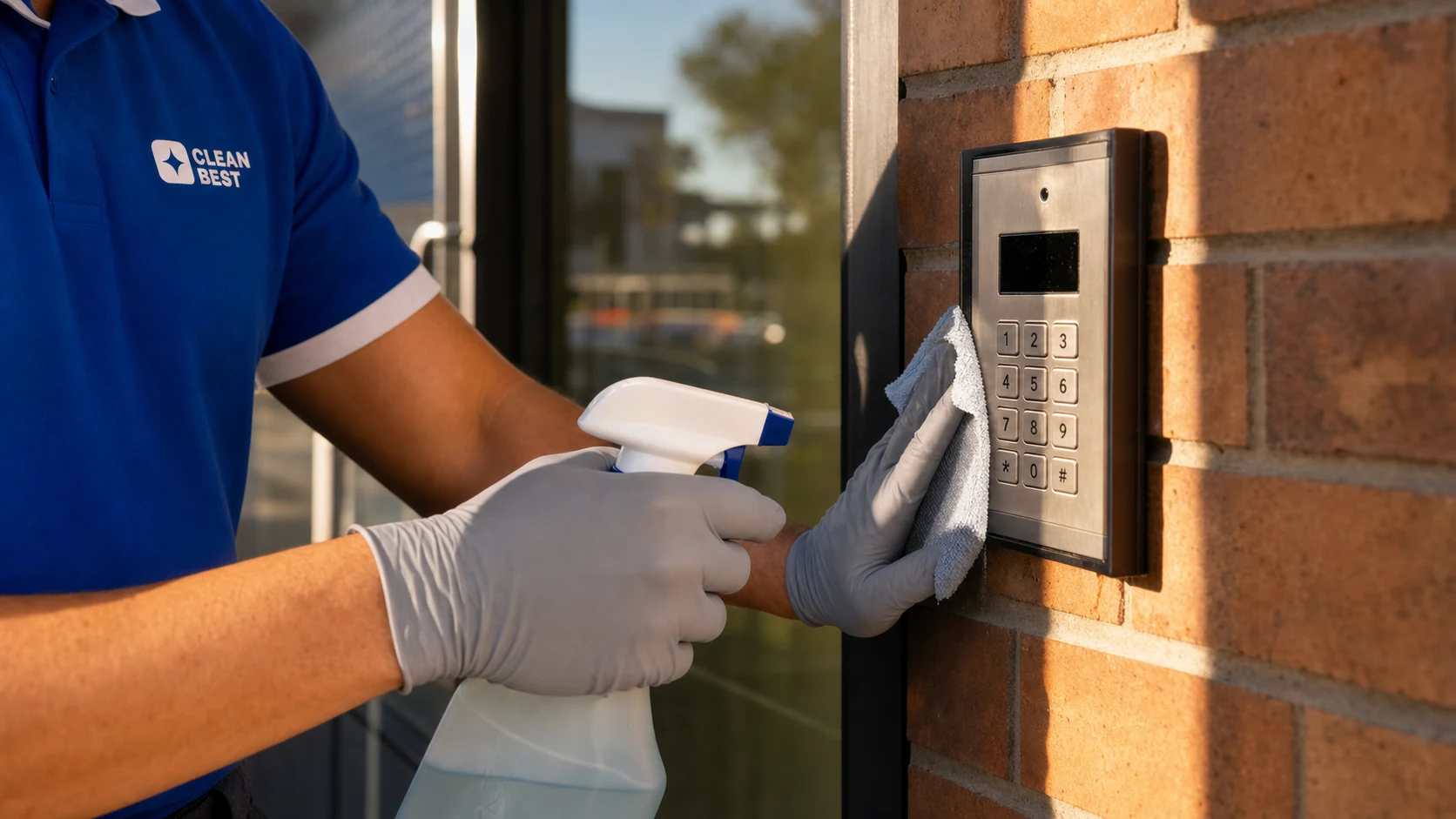
The proposed visit order considers retail, community facilities and mixed-use premises, with particular attention to staff areas, amenities and the effect of large yards. Clean Best records the sequence so it can be checked against the operating window.
Service may be arranged between fleet peaks, around shift changes or within another depot-approved access window. The final timing depends on access, the client’s building rules and whether issues involving shift patterns require a separate instruction or exclusion.
- Traffic pattern for community facilities
- Method for staff areas
- Control for large yards
- Window recorded before mobilisation
What's included
What the written Lakemba checklist should decide
These are decision points for transport depot cleaning at premises associated with retail, community facilities and mixed-use premises; the final inclusions follow the site assessment.
- Evidence through task frequencies
- Review support from review contact
- Access instructions for community facilities
- Exclusions and approvals for additional work
- Condition and frequency for staff areas
- Method and responsibility for amenities
- Periodic treatment of approved workshop-support zones
- Controls associated with large yards
- Operating response to shift patterns
- Approved timing: between fleet peaks, around shift changes or within another depot-approved access window
Specialist, licensed, hazardous or client-controlled work is excluded unless it is assessed, documented and accepted in writing for the Lakemba premises.
Evidence · task frequencies
A review trail for transport depot cleaning in Lakemba
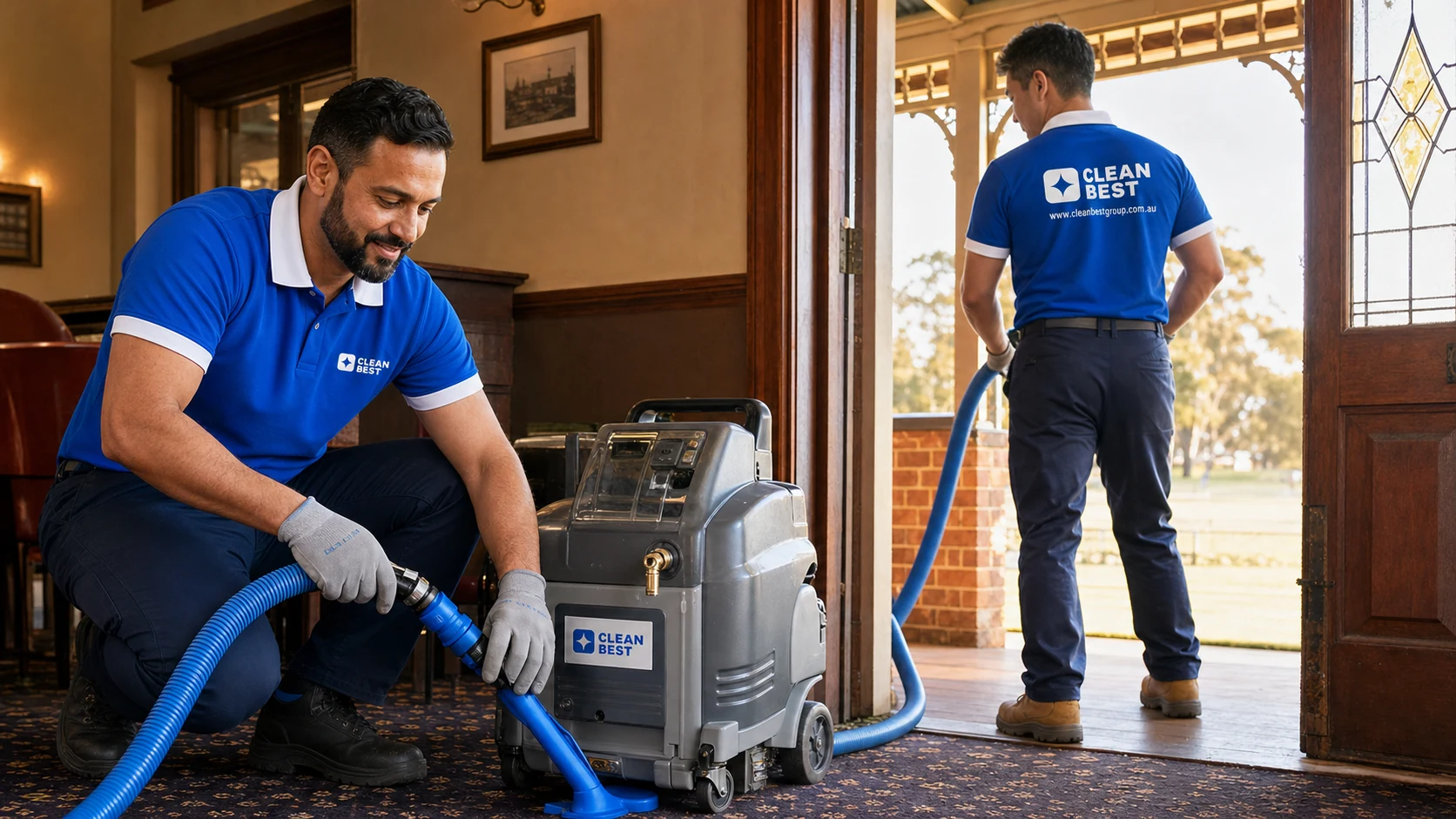
The service record connects task frequencies, review contact and a depot zone plan with the rooms or zones they affect. This allows the client to identify an exact task and frequency when feedback is raised.
Where conditions involving large yards or shift patterns change, the instruction should be updated before the next affected visit. Quality claims remain limited to the inspection and response process actually agreed for the site.
- Named Lakemba service contact
- Task frequencies linked to rooms or zones
- Access changes recorded before the next visit
- Task frequencies
Pricing
How a Lakemba transport depot cleaning quote is structured
The written price follows visible workload, frequency, condition and access. It is not a postcode rate and it does not assume that every premises associated with community facilities has the same requirements.
Focused community facilities scope
Smaller or clearly bounded premises where staff areas and amenities make up most recurring work.
- Frequency around community facilities
- Access and timing for between fleet peaks, around shift changes or within another depot-approved access window
- Periodic work involving approved workshop-support zones
Fixed price, in writing, before anyone starts.
Multi-zone Lakemba scope
Premises with several operating areas, mixed surfaces or access conditions influenced by mixed-use premises.
- Access and timing for between fleet peaks, around shift changes or within another depot-approved access window
- Periodic work involving approved workshop-support zones
- Workload attached to staff areas
Fixed price, in writing, before anyone starts.
Complex operating scope
A larger, restricted or mixed-use site where large yards, shift patterns or periodic work requires additional planning.
- Workload attached to staff areas
- Condition and method for amenities
- Controls required for large yards
Fixed price, in writing, before anyone starts.
Free walkthrough in Yennora, then a written quote within 24 hours.
How it works
From Lakemba enquiry to an approved transport depot cleaning roster
The sequence below turns the locality context, visible workload and site instructions into a quote that can be checked before work begins.
- 1
Set the quality review
Name the person who will compare completed work with review contact and record an issue when an agreed item needs attention.
- 2
Describe the Lakemba premises
Share the address, approximate size, operating hours and whether the site is primarily used for community facilities, mixed-use premises or another stated purpose.
- 3
Inspect staff areas
Review condition, surfaces, traffic and the practical boundary between staff areas and amenities.
- 4
Resolve large yards
Record how large yards, shift patterns and building access affect method, sequence or supervision.
Quality control · review contact
Checking transport depot cleaning against the Lakemba agreement
Quality review starts with the task and frequency record, not a generic satisfaction claim. If work involving staff areas needs attention, the client can identify the relevant zone, expected frequency and evidence in review contact.
The response path should name the service contact and explain how large yards, access or a changed operating requirement will be handled. Any promised inspection interval remains specific to the signed Lakemba agreement.
- Check staff areas against its frequency
- Record feedback through review contact
- Review changes involving large yards
- Confirm corrections with the named contact

FAQ
Lakemba questions about transport depot cleaning
Seven answers selected for the locality’s mix of retail, community facilities and mixed-use premises, including scope, access, evidence, risk and quote decisions.
Are consumables included with transport depot cleaning in Lakemba?
A generic transport depot cleaning answer would hide the part that matters. Clean Best first checks whether washroom, kitchen or hygiene consumables are client supplied, cleaner supplied or excluded, then considers the storage and restocking needs created by community facilities at the Lakemba premises. The conclusion is written alongside task frequencies, review contact and any relevant exclusion. The client can then state product responsibility, approval and replenishment frequency as separate quote items, knowing the answer reflects the building rather than a location keyword.
Which Lakemba transport depot cleaning tasks should be scheduled periodically?
Clean Best answers this transport depot cleaning question during assessment by examining lower-frequency work related to amenities, approved workshop-support zones and presentation beyond the recurring visit. Because Lakemba includes retail, community facilities and mixed-use premises, the site contact also needs to consider seasonal traffic, condition and the operating pattern of community facilities. The final instruction is supported by task frequencies instead of a broad marketing claim. The parties should therefore give each periodic task its own frequency, approval rule and completion window.
Can the Lakemba transport depot cleaning scope change after service starts?
The useful transport depot cleaning answer depends on the actual premises. Clean Best reviews documented changes to areas, tasks, frequencies, access or operating hours without relying on a verbal assumption, then relates it to how a change affects staff areas, large yards and the agreed labour requirement in Lakemba. That review is documented through task frequencies, with review contact available for the service conversation. Before approval, the client should review the change with the named contact and confirm any scope or price adjustment in writing so the result is part of the scope rather than an unsupported assumption.
What happens before the first transport depot cleaning visit in Lakemba?
For transport depot cleaning at premises in Lakemba, Clean Best treats confirmation of task frequencies, the service window, contacts, keys, alarms and the first task schedule as a scope decision. The local mix of retail, community facilities and mixed-use premises can influence whether issues involving large yards or shift patterns require an induction or site-specific instruction, while issues involving large yards remain a service consideration. Clean Best records the agreed position using task frequencies and a named contact. To keep the quote comparable and enforceable, complete mobilisation only after the written scope and practical access details agree.
How should issues involving large yards be handled in a Lakemba transport depot cleaning plan?
This transport depot cleaning issue is resolved through the written scope, not by the postcode alone. Clean Best assesses how large yards and shift patterns should be translated into a method, sequence, boundary or escalation instruction, considers how areas associated with community facilities are occupied or used and records the outcome for the Lakemba premises. Records for task frequencies and review contact support later review. To avoid ambiguity, the client and service contact should confirm the building-specific hazard information with the client before selecting the cleaning method.
What should buyers compare between Lakemba transport depot cleaning proposals?
For transport depot cleaning, Clean Best starts with the stated workload for staff areas, task frequencies, exclusions, evidence, access and periodic work. In Lakemba, the published commercial context includes retail, community facilities and mixed-use premises, so the assessment considers whether the proposal responds to retail, community facilities and mixed-use premises or simply repeats a standard package rather than applying a suburb package. The written service record uses task frequencies and review contact to make the decision checkable. The practical next step is to compare written scopes line by line and ask for clarification before choosing on price alone.
What should transport depot cleaning cover for community facilities in Lakemba?
For transport depot cleaning, the deciding information is whether staff areas, amenities and approved workshop-support zones belong in every visit or a separate periodic schedule. Clean Best compares that information with the workload created by community facilities and mixed-use premises and the practical effect of large yards at the Lakemba site. The result should appear in task frequencies or review contact, depending on the issue. The buyer should record each area, task, frequency and exclusion before the Lakemba roster starts so both the client contact and cleaning team use the same answer.
Keep exploring
More transport depot cleaning service areas
Compare how transport depot cleaning requirements change across nearby localities while keeping the same written-scope standard.

Request a Lakemba transport depot cleaning assessment
Call 02 5839 3012, mobile 0485 000 860, or email [email protected]. Describe the premises, community facilities, operating hours and priority concern so Clean Best can prepare the appropriate written scope.